What Could London’s PHV Fleet Look Like in 2031? Three Scenarios, Built From What’s Actually on the Record
Analysis TfL has told LDV directly that it holds no projection of how many robotaxis it expects to licence, or
Analysis TfL has told LDV directly that it holds no projection of how many robotaxis it expects to licence, or
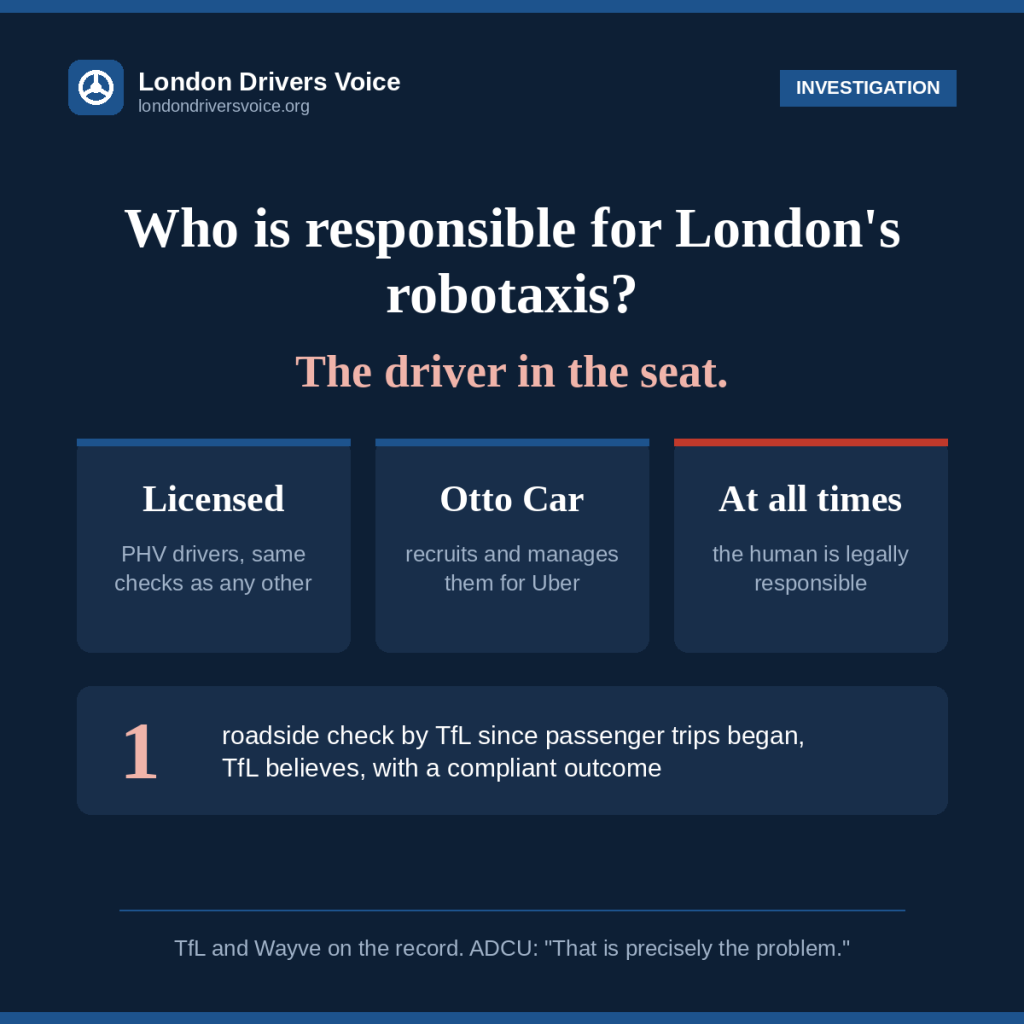
TfL and Wayve have answered ADCU’s questions about the safety drivers in London’s first passenger-carrying robotaxis. They are licensed PHV drivers, recruited through Otto Car, and they carry full responsibility for a car the AI is driving. ADCU says that is precisely the problem.
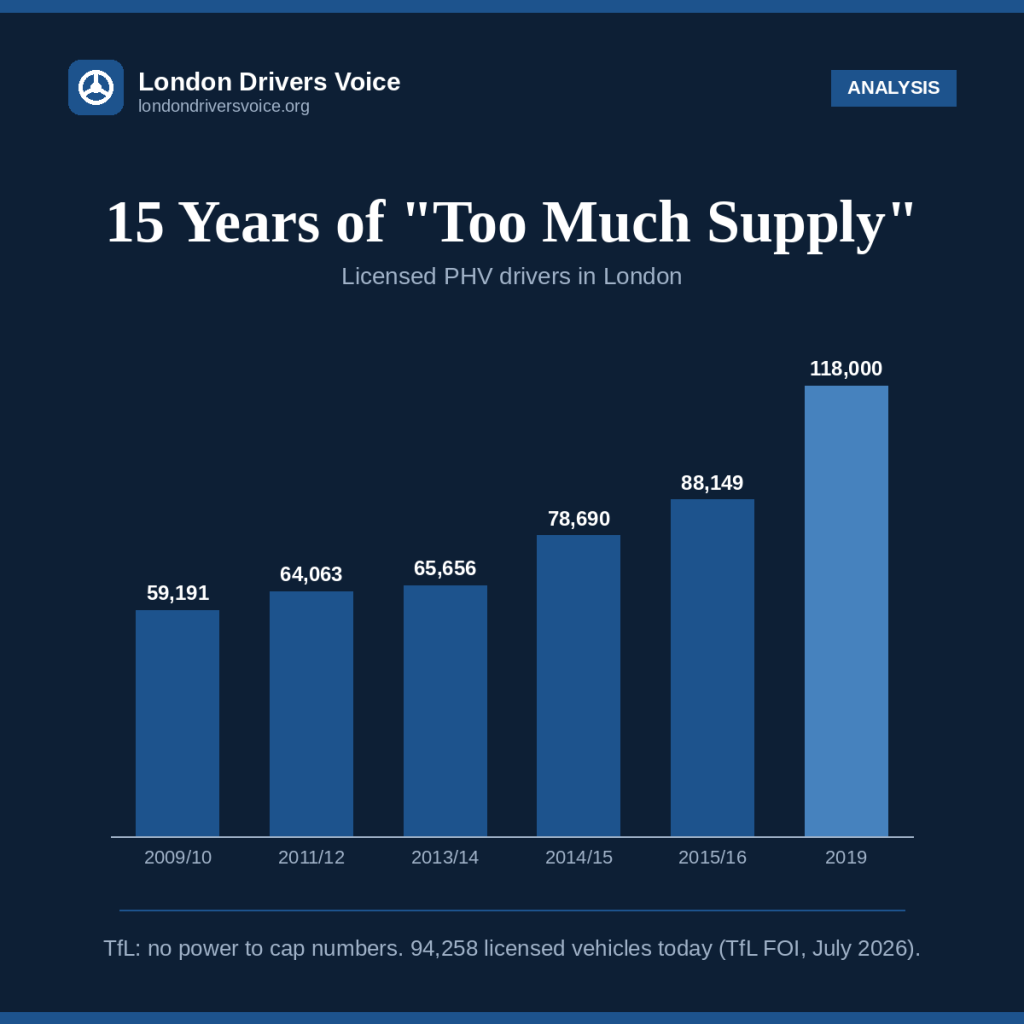
TfL’s own Commissioner admits London has “too much supply” of minicabs, a problem tracked for 15 years and never fixed. TfL says it still has no power to cap numbers, and its 15-vehicle robotaxi trial isn’t a cap either. What drivers are entitled to ask.
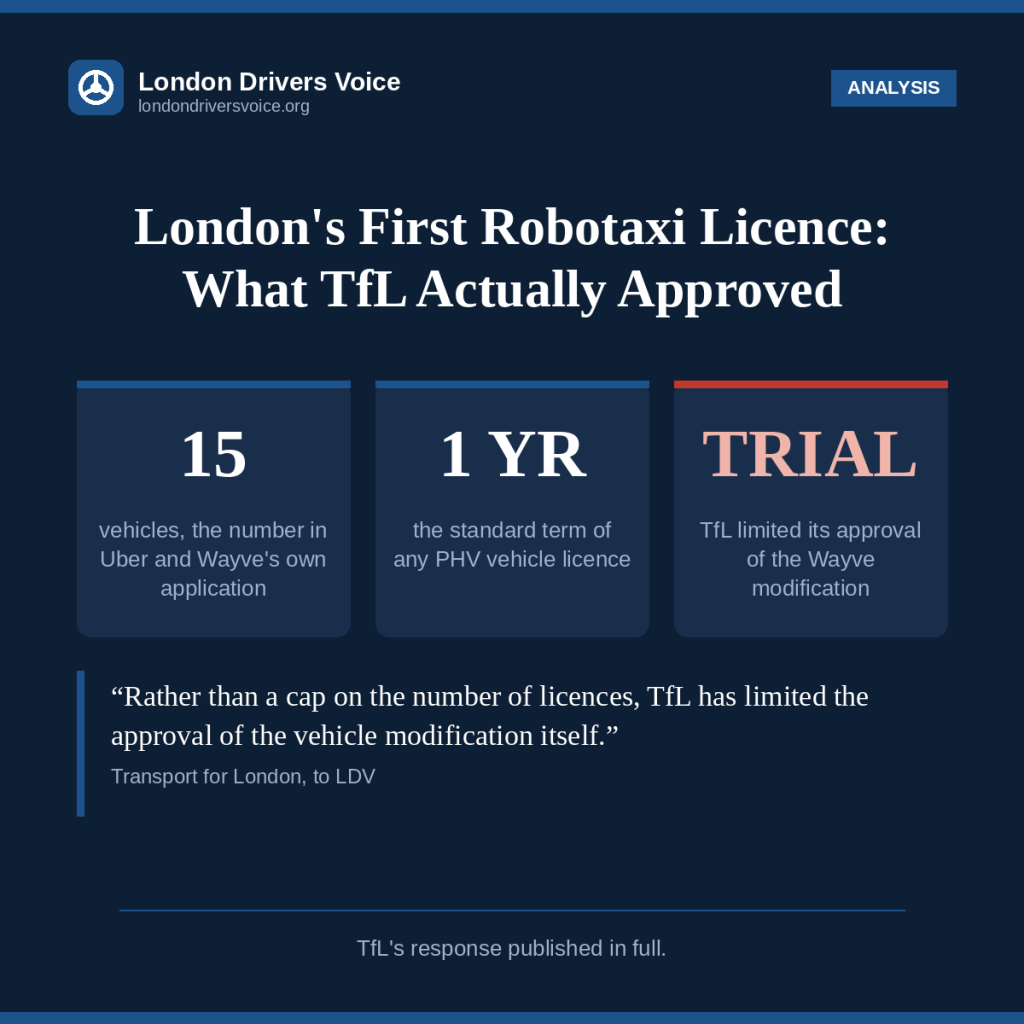
TfL licensed the first robotaxis to carry passengers in London: up to 15 Wayve vehicles on a one-year trial. TfL says that is a limit on its approval of the vehicle modification, not a cap on licences. What Uber and Wayve won, why Waymo and Baidu are still waiting, and what it means.
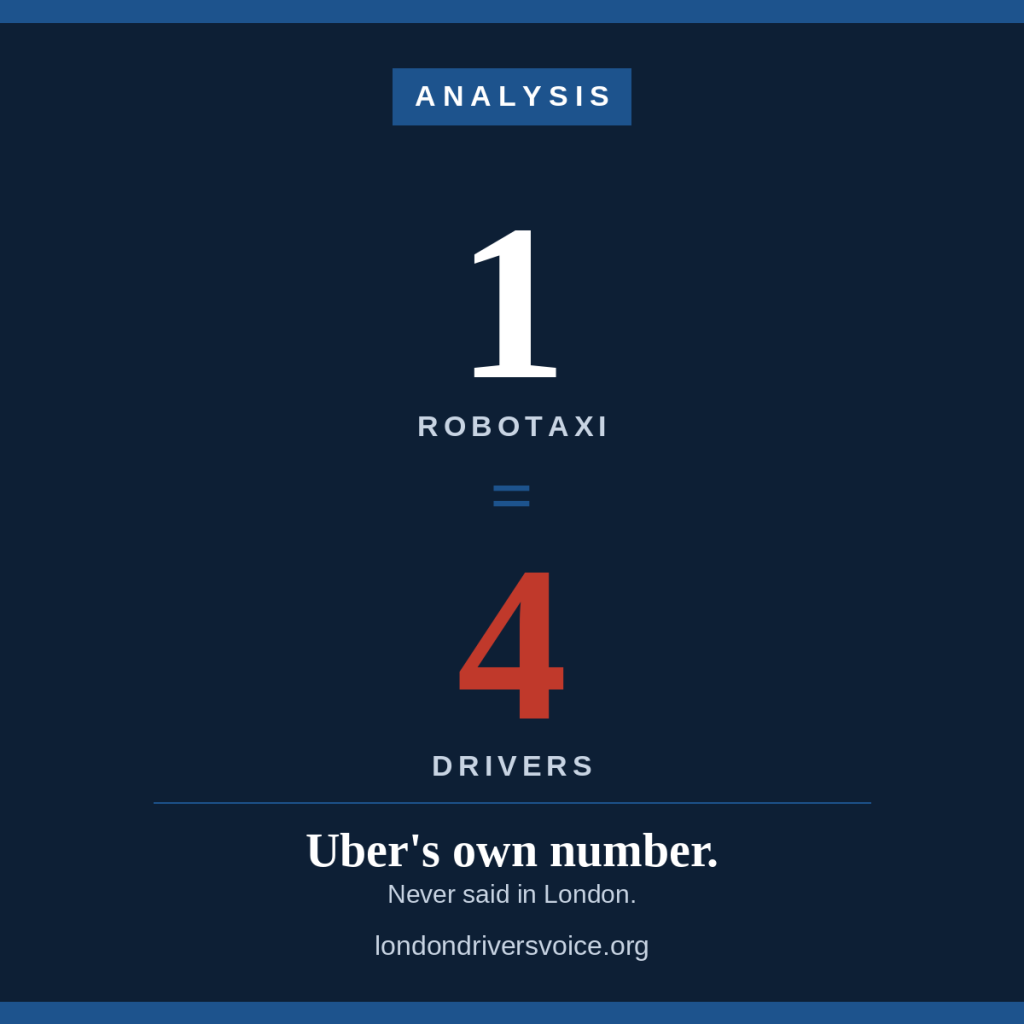
Uber’s own policy paper tells US regulators one robotaxi does the work of four drivers. It’s never said this to London — where robotaxis started road testing this week, TfL admits it has no driver-numbers projection, and Uber’s fifth RoR request went unanswered.
Renting vs buying a PCO car in London: what Otto Car, Splend and Hertz actually sell — and the one risk their marketing never mentions.
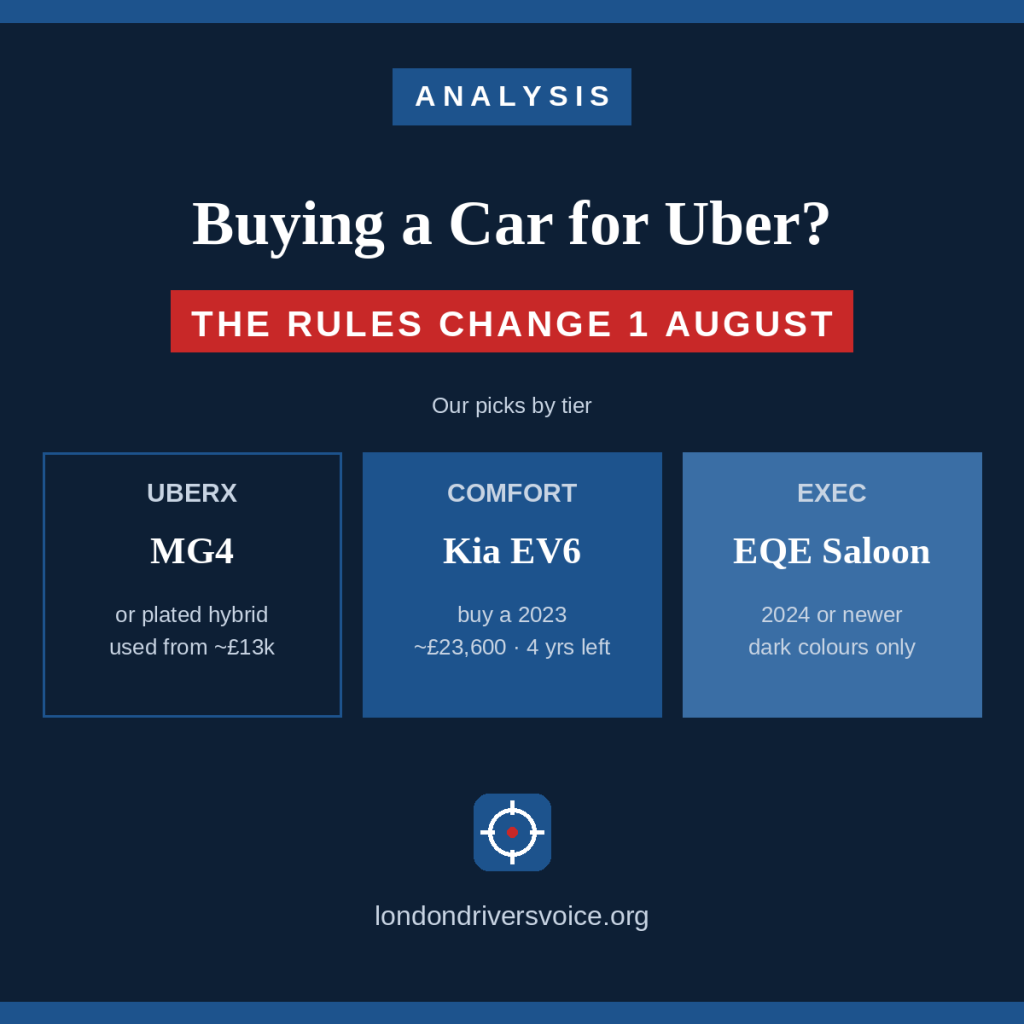
From 1 August, Uber tightens which cars qualify for Comfort and Exec in London — five brands, dark colours, saloons only at the top tier. Our guide: what qualifies, which year to buy, how to finance it, and the break-even that decides everything.
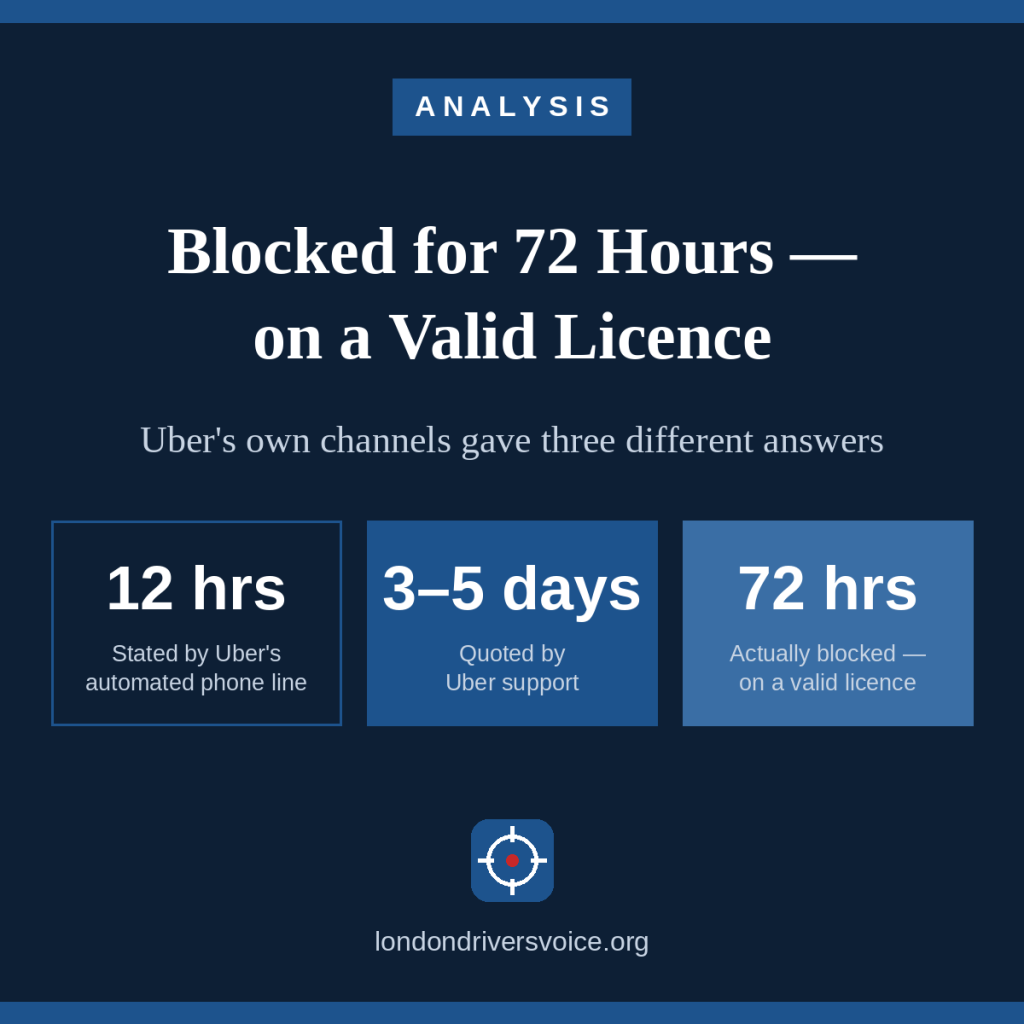
Uber blocked a driver for 72 hours over a licence that was still valid — after its own phone line promised a 12-hour review.

Investigation · Driver Welfare A PHV insurance broker quoted 16.98%. The real APR was 54.22%. The difference was not profit
Roughly 300,000 self-employed drivers in England pay income tax, NI, and licensing fees on every fare. As autonomous vehicles take over that work, the same tax base shifts toward corporately-owned fleets with very different tax exposure — and no UK government department has modelled what that transition will cost.